Caught in the Crossfire: Africa's Humanitarian Aid in the Shadow of the Hormuz Blockade
With funding already cut and supply routes now blocked, Africa's humanitarian system is facing two crises at once — and the response is treating them as separate problems.
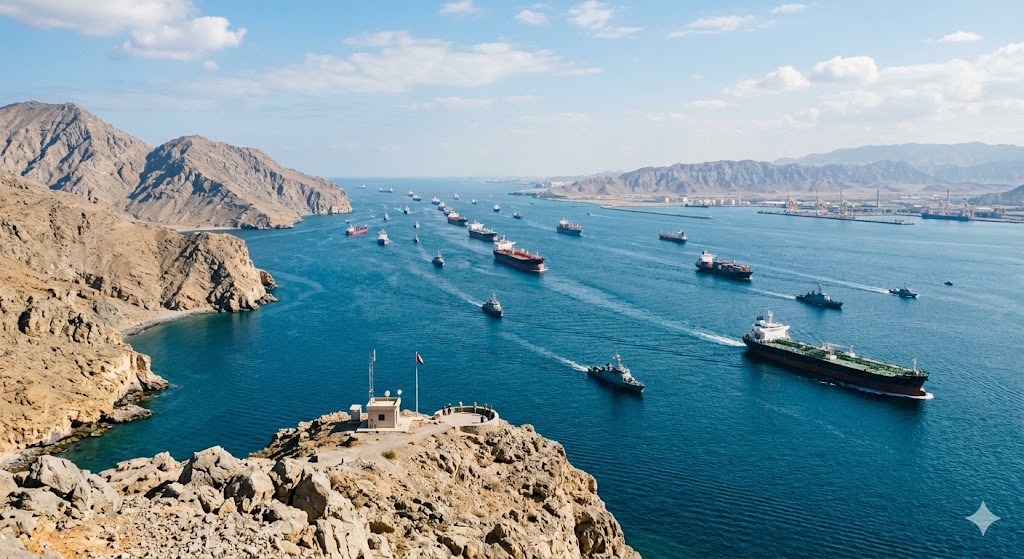
For over two months, the dual US-Iran blockade on the Strait of Hormuz has severely disrupted global shipping and commercial traffic across Asia, Europe, and Africa. On 4 May 2026, amid a fragile ceasefire and broken peace talks, the US announced Operation "Project Freedom" — a military escort initiative to guide stranded ships out of the strait and relieve mounting pressure on global trade.
The economic consequences are significant. The IMF has projected global growth to slow from 3.4 to 3.1% and inflation to rise from 3.8 to 4.4% through the remainder of 2026, with analysts warning of growing stagflation risks.
Less visible, but equally consequential, is the humanitarian toll. The Strait of Hormuz is not only a chokepoint for global trade — it is a critical maritime corridor for humanitarian supplies reaching conflict-affected countries in Africa. The UN Spokesperson has flagged the impact of the disruption on humanitarian operations, while aid organizations have warned of the entire supply chain coming under systemic stress, calling for a humanitarian corridor to keep aid flowing to the most vulnerable populations.
Impact on Humanitarian Supply Chain
With over 134 million people relying on aid in Africa, the humanitarian impact of the Hormuz crisis is tangible. The strait is the main gateway for major ports in the Persian Gulf, and its disruption has left humanitarian supplies stranded and delayed across the region.
Key humanitarian hubs in the Gulf have been directly affected. The International Rescue Committee (IRC) reported that pharmaceutical supplies intended for Sudan were stranded in Dubai before being rerouted by land to Oman and flown to Sudan, leading to prolonged aid delivery. WHO has similarly considered alternative supply routes after disruptions to its main logistics hub in Dubai, with prospects of shifting operations to UN logistical bases in Africa.
The cost implications are significant. The shift from maritime to air and land transport has increased overall aid delivery costs by up to 50%, with air freight spiking by 40–62% and land transport up 20% compared to last year. UNHCR reported freight rates for relief items rising by nearly 18% since the start of the crisis — and for some shipments, including supplies from Dubai to Sudan and Chad, costs have more than doubled.
WFP has warned of the downstream effect. Rising costs across the supply chain reduce how much food the organization can procure, ship, and deliver — meaning fewer people reached, smaller rations, and less purchasing power for families already spending the majority of their income on food.
Strategic Risk: A System Facing Multi-Faceted Shocks
The Food and Agriculture Organization (FAO) warned that a prolonged Hormuz closure could trigger a global food catastrophe. With over a third of global fertilizers transiting the strait, African countries dependent on Gulf fertilizers risk being unable to sustain agricultural production, pushing food prices higher and deepening an already severe food security crisis across the continent.
But the Hormuz crisis did not arrive in a vacuum. Even before the blockade, WFP had warned that 55 million people in West and Central Africa could face crisis levels of hunger between June and August this year — a direct consequence of cuts to humanitarian funding.
Two simultaneous shocks are now hitting the same underfunded, overstretched system. The first is a funding collapse, with US foreign aid spending falling from $68 billion in 2024 to $32 billion in 2025 — less than half. The second is a supply shock, with the same humanitarian organizations now facing delivery cost increases of 50–70%, with no additional funding to absorb them.
What is striking is that these two shocks are not being treated as a single crisis. Donors are managing the funding collapse as a political and budgetary issue. The Hormuz disruption is being tracked as a trade and logistics problem. But on the ground, they are inseparable — the same organization trying to reroute 70,000 tons of food is doing so with significantly less budget than a year ago.
Response — What Actors Are Doing
At the institutional level, the UN has moved quickly. UNOPS announced the formation of a task force in coordination with UNCTAD, the International Maritime Organization, and the International Chamber of Commerce to establish safe and predictable transit for fertilizers and humanitarian raw materials through the strait. The model is not untested — versions of it were deployed in Yemen, Gaza, and the Black Sea Grain Initiative. The mechanism exists. What is missing is the political agreement to activate it.
At the operational level, UN agencies and humanitarian organizations are negotiating priority cargo status with carriers and securing waivers on shipping surcharges. Where maritime routes are unavailable, organizations are rerouting through multiple land corridors. For Sudan, this means improvised routes — overland from the UAE to Oman, then air-freighted to Port Sudan — each carrying its own congestion, cost, and import clearance complications.
What is notably absent is a coordinated response to the compound crisis as a whole. There is no dedicated humanitarian supply chain emergency fund, no activated prepositioning mechanism, and no joint contingency planning platform bringing together the funding crisis and the logistics crisis under a single response framework.
Conclusion and Recommendations
The humanitarian system is no stranger to supply chain disruptions. COVID-19 and the 2023–2024 Houthi attacks on Red Sea shipping both caused significant delays and disruptions to aid delivery. Each time, the system adapted. But the Hormuz crisis is different in scale — it closes the Gulf entirely, disrupts the Red Sea and Suez Canal simultaneously, and is hitting organizations already under immense financial pressure.
In the short term, the priority is getting humanitarian cargo moving through the strait. UNOPS has put forward a practical mechanism — monitoring vessels, verifying cargo, deconflicting shipments — ready to operationalize within seven days. What is needed now is for governments to push both parties to prioritize humanitarian access, and for donors to provide predictable funding that allows organizations to absorb and respond to disruptions as they unfold.
Longer term, the crisis has exposed a structural problem that predates the Iran war: Africa's humanitarian supply chain runs almost entirely through one corridor. Regional prepositioning hubs in East and West Africa — Accra, Djibouti, and Mombasa — exist but have never been adequately resourced to function as genuine alternatives.
The Hormuz crisis did not cause this vulnerability. It exposed it. The funding was already cut. The stockpiles were already thin. The corridor was already the only option. What happens next depends on whether the response comes while there is still time to act, or after the consequences are already visible on the ground.